

How does a pendulum clock synchronize its time?
As a supplier of pendulum clocks, I've always been fascinated by the intricate mechanism that allows these timepieces to keep such precise time. Pendulum clocks have a long and storied history, dating back to the 17th century when Christiaan Huygens patented the first pendulum clock in 1656. Since then, they have been a symbol of reliability and precision, gracing the halls of homes, offices, and public buildings around the world. In this blog post, I'll delve into the science behind how a pendulum clock synchronizes its time, exploring the principles of physics and the engineering marvels that make these clocks work.
The Basics of a Pendulum Clock
At the heart of a pendulum clock is the pendulum itself, a weight suspended from a pivot point that swings back and forth in a regular rhythm. The motion of the pendulum is governed by the laws of physics, specifically the law of conservation of energy and the principle of simple harmonic motion. As the pendulum swings, it converts potential energy (stored in the weight when it is at its highest point) into kinetic energy (the energy of motion) and back again, creating a regular and predictable pattern of movement.
The pendulum is connected to the clock's escapement mechanism, which is responsible for controlling the movement of the clock's gears and hands. The escapement releases a small amount of energy with each swing of the pendulum, allowing the gears to advance by a fixed amount and move the hands of the clock forward. This process is repeated continuously, with the pendulum acting as a regulator to ensure that the clock keeps accurate time.
Synchronization of Time
The key to a pendulum clock's accuracy lies in its ability to maintain a consistent and regular swing. Any variation in the length of the pendulum or the force acting on it can cause the clock to run fast or slow. To ensure that the clock keeps accurate time, it is necessary to adjust the length of the pendulum or the tension of the spring that powers the clock.
One of the most common methods of adjusting a pendulum clock is to change the length of the pendulum. By lengthening or shortening the pendulum, it is possible to change the period of its swing, which is the time it takes for the pendulum to complete one full cycle of movement. A longer pendulum will have a slower swing, while a shorter pendulum will have a faster swing. By adjusting the length of the pendulum, it is possible to fine-tune the clock's accuracy and ensure that it keeps time correctly.
Another method of adjusting a pendulum clock is to change the tension of the spring that powers the clock. The spring provides the energy that drives the clock's gears and hands, and by adjusting the tension of the spring, it is possible to control the speed at which the clock runs. A tighter spring will cause the clock to run faster, while a looser spring will cause the clock to run slower.
Factors Affecting Synchronization
There are several factors that can affect the synchronization of a pendulum clock, including temperature, humidity, and air pressure. Changes in temperature can cause the length of the pendulum to expand or contract, which can affect the period of its swing and cause the clock to run fast or slow. Similarly, changes in humidity can cause the wood or metal parts of the clock to expand or contract, which can also affect the clock's accuracy.
Air pressure can also affect the synchronization of a pendulum clock, as changes in air pressure can cause the pendulum to experience more or less resistance as it swings through the air. This can affect the speed of the pendulum's swing and cause the clock to run fast or slow.
To minimize the effects of these factors, it is important to keep the clock in a stable environment with a consistent temperature and humidity level. It is also a good idea to avoid placing the clock near sources of heat, cold, or drafts, as these can cause the temperature and humidity to fluctuate.
Our Pendulum Clock Offerings
As a supplier of pendulum clocks, we offer a wide range of high-quality timepieces to suit every taste and budget. Our collection includes Gorgeous Solemn Wall Clock, Storage Wall Clock, and Traditional Schoolhouse Pendulum Clock, each of which is crafted with precision and attention to detail.
Our pendulum clocks are designed to be both functional and beautiful, with elegant designs and high-quality materials that will enhance the decor of any room. Whether you are looking for a classic timepiece to add a touch of sophistication to your home or a practical clock for your office or classroom, we have the perfect pendulum clock for you.
Conclusion
In conclusion, the synchronization of a pendulum clock is a fascinating process that involves the principles of physics and the engineering marvels of the clock's escapement mechanism. By maintaining a consistent and regular swing, adjusting the length of the pendulum or the tension of the spring, and minimizing the effects of temperature, humidity, and air pressure, it is possible to ensure that a pendulum clock keeps accurate time.

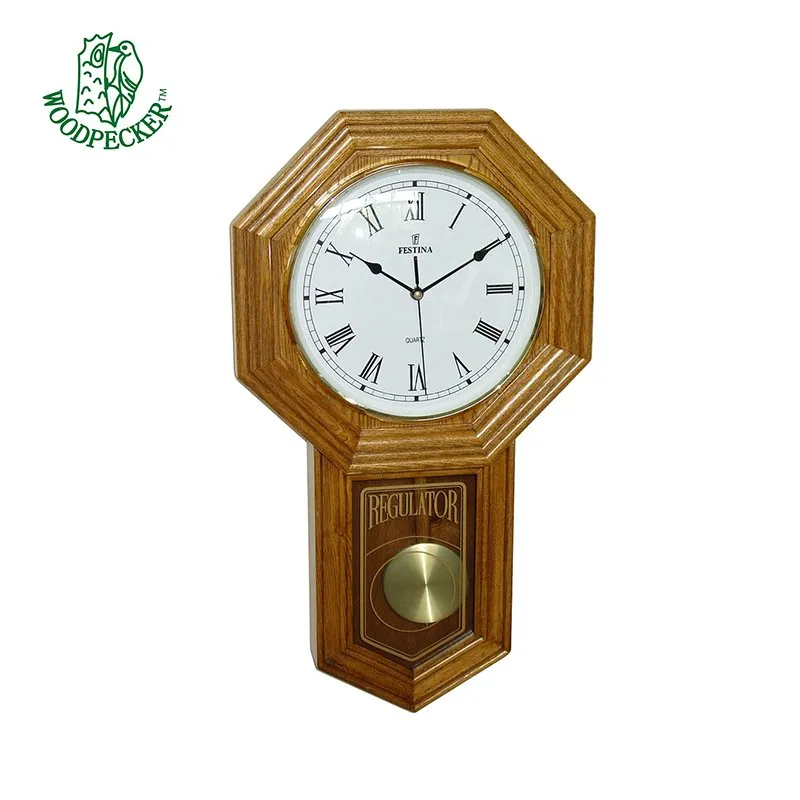
If you are interested in purchasing a pendulum clock, we invite you to explore our collection and discover the beauty and elegance of these timeless timepieces. Our team of experts is always available to answer any questions you may have and to help you find the perfect clock for your needs. Whether you are a collector, a decorator, or simply looking for a reliable timekeeper, we are confident that you will find a pendulum clock that you will love. Contact us today to start your journey into the world of pendulum clocks and experience the precision and charm of these classic timepieces.
References
- Cutnell, J. D., & Johnson, K. W. (2017). Physics. Wiley.
- Huygens, C. (1673). Horologium Oscillatorium sive de motu pendulorum ad horologia aptato demonstrationes geometricae. Paris: Apud F. Muguet.
- King, H. C. (1978). "Christiaan Huygens and the Pendulum Clock". Scientific American. 239 (2): 168–183.